
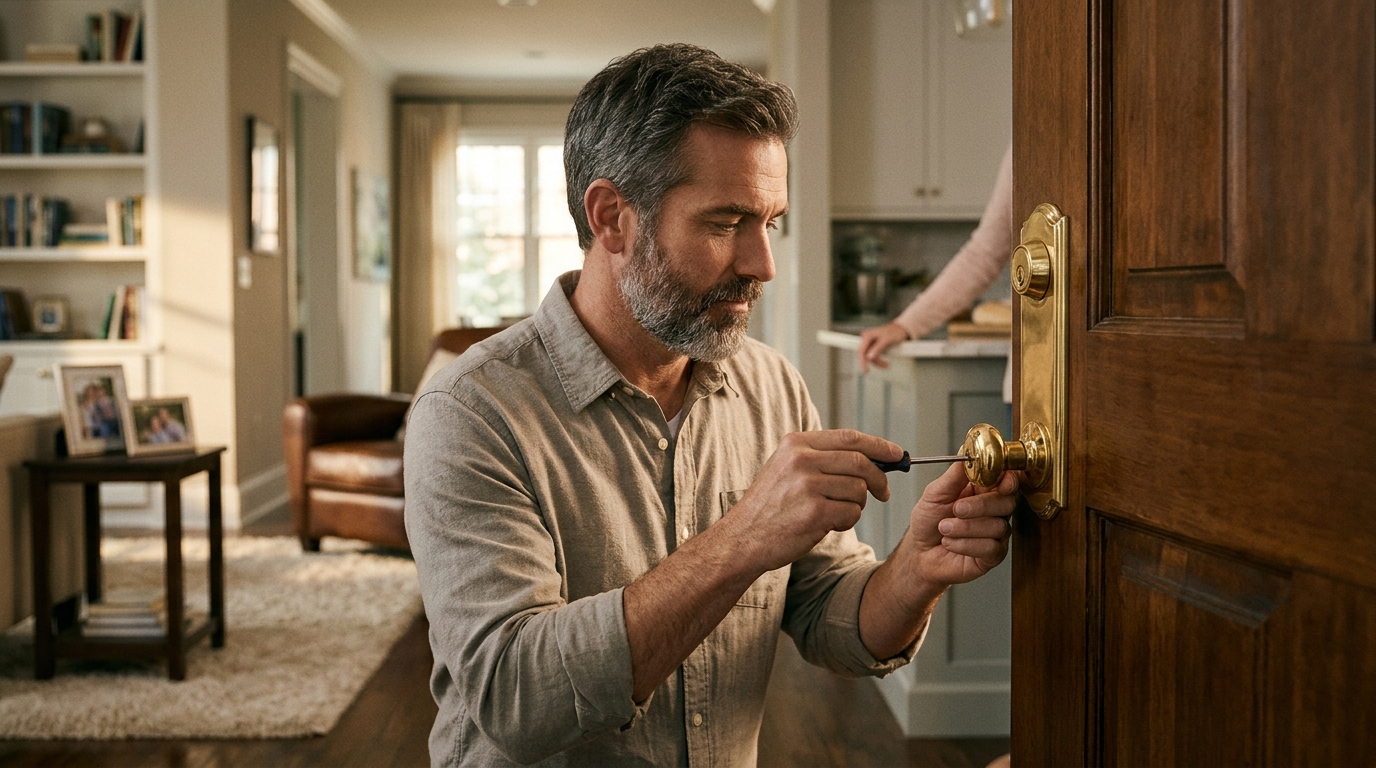
How do I know if my home's locks need professional repair or just adjustment?
Most residential lock issues stem from minor wear, misalignment, or debris rather than total mechanical failure. You can often fix simple sticking or loose hardware with basic tools, but persistent problems, key breakage, or security breaches require a licensed locksmith. LT Lock and Key in Encinitas helps homeowners distinguish between these two scenarios to save money and ensure safety.
Identifying Signs of Minor Adjustment Needs
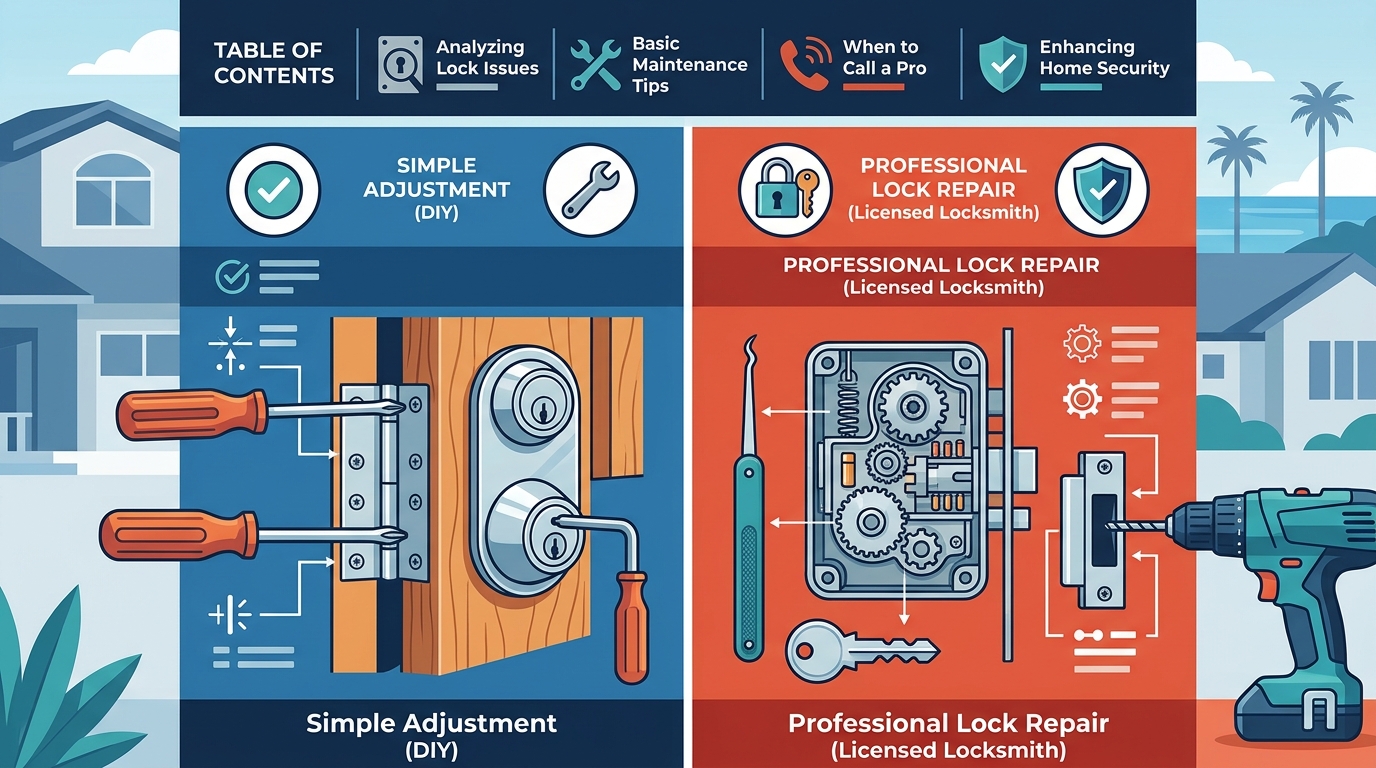
Many lock problems are superficial and can be resolved with minor adjustments. A lock that sticks slightly when turning the key often suffers from misalignment or accumulated dust. In these cases, applying a dry graphite lubricant or tightening a loose screw may restore smooth operation. Homeowners should first check if the door itself is sagging, as this puts pressure on the strike plate and makes the lock feel stiff.
Another common issue is a key that turns with slight resistance. This usually indicates that the internal pins are not seating perfectly due to wear. If the lock still functions securely and the key does not break, it is likely a candidate for adjustment rather than replacement. However, if the key snaps or the lock feels loose in the door frame, professional intervention is necessary.
When Professional Repair Is Required
Professional repair becomes essential when the lock mechanism is damaged or compromised. If a key breaks inside the lock, attempting to remove it with DIY tools often causes further damage to the internal springs and pins. A locksmith has specialized extraction tools to remove broken keys without destroying the cylinder. Similarly, if the lock no longer latches securely, the internal bolt may be worn or broken, posing a significant security risk.
Security breaches also mandate professional repair. If you suspect unauthorized access or if the lock has been forced, the internal components are likely damaged in ways that are not visible from the outside. LT Lock and Key technicians can inspect the cylinder and strike plate to ensure the lock is fully secure. Ignoring these signs can leave your home vulnerable to intruders.
The Role of Lock Age and Wear
The age of your lock plays a critical role in determining whether it needs repair or replacement. Most residential locks last between 10 and 15 years, depending on usage and maintenance. As locks age, the internal metal components wear down, leading to increased friction and potential failure. If your locks are nearing this age limit and showing signs of sticking, it may be more cost-effective to replace them rather than repair them repeatedly.
However, age alone is not the sole determinant. A well-maintained lock can last longer, while a neglected one may fail prematurely. Regular maintenance, such as lubricating the keyway and checking for loose screws, can extend the life of your locks. If you are unsure about the condition of your locks, a professional assessment can provide clarity on whether repair or replacement is the best option.
Cost Considerations: Repair vs. Replacement
Understanding the cost implications can help you make an informed decision. Lock repair is generally less expensive than full replacement, as it involves fixing existing components rather than installing new hardware. However, if the lock is old or severely damaged, the cost of multiple repairs may exceed the price of a new lock. In such cases, replacement is the more economical choice in the long run.
LT Lock and Key offers transparent pricing for both repair and replacement services. We assess the condition of your locks and provide a clear estimate before proceeding with any work. This ensures that you are not overcharged for unnecessary repairs or forced into buying new locks when a simple fix would suffice. Our goal is to provide the most cost-effective solution that meets your security needs.
Key Takeaways
- Minor sticking or resistance can often be fixed with lubrication or door alignment adjustments.
- Broken keys or insecure latching require professional repair to ensure safety.
- Locks older than 10-15 years may be better replaced than repaired repeatedly.
- Security breaches or forced entry always necessitate professional inspection.
- Regular maintenance can extend the life of your locks and prevent major failures.
- LT Lock and Key provides transparent pricing for both repair and replacement options.
Frequently Asked Questions
Can I fix a sticking lock myself?
Yes, if the sticking is due to misalignment or dust, you can try tightening screws or applying graphite lubricant. However, if the lock remains stiff or the key breaks, call a professional.
How often should I lubricate my locks?
It is recommended to lubricate your locks once a year with a dry graphite lubricant to keep them operating smoothly.
What should I do if a key breaks in the lock?
Do not attempt to remove it with pliers or other DIY tools, as this can cause more damage. Contact a locksmith who has specialized extraction tools.
How long do residential locks typically last?
Most residential locks last between 10 and 15 years, depending on usage and maintenance. Regular care can extend their lifespan.
Is it cheaper to repair or replace an old lock?
If the lock is old and has required multiple repairs, replacement is often more cost-effective. A locksmith can assess the condition and provide a clear estimate.
Does LT Lock and Key offer same-day service?
Yes, LT Lock and Key offers same-day service for most residential lock repair and installation requests in Encinitas and surrounding areas.