
Essential Criteria for Choosing Which Locks to Rekey in Rental Properties
Property managers and landlords face a constant balancing act between security, cost, and operational efficiency. According to recent industry data, the average cost to rekey a lock ranges from $50 to $150 per lock, while replacement can cost significantly more depending on the hardware grade. This financial reality makes strategic decision-making critical for maintaining healthy profit margins. Choosing the right locks to rekey is not merely a maintenance task; it is a core component of risk management and tenant satisfaction. By establishing clear criteria, you can protect your assets without overspending on unnecessary hardware upgrades. (Contact Us Encinitas CA)
Why Rekeying is the First Line of Defense
Rekeying is the process of changing the internal pins of a lock cylinder so that it operates with a new key, while the existing hardware remains in place. This practice is fundamental to rental property management because it instantly nullifies access for former tenants, contractors, or anyone who may have retained a copy of the old key. In the rental market, trust is built on security. When you provide a property with fresh, unique access credentials, you demonstrate a commitment to tenant safety. (Encinitas Locksmith Residential amp)
LT Lock and Key has been providing residential and commercial locksmith services since 2006. Our team in Encinitas, Carlsbad, Del Mar & Carmel Valley, CA has over 25 years of locksmith experience and is a proud member of the Associated Locksmiths of America. This longevity underscores the importance of professional intervention in security matters. Attempting to rekey locks without proper tools or knowledge can result in damaged cylinders, leading to higher costs down the line. Professional rekeying ensures that the lock mechanism functions smoothly and securely. (Locksmith Encinitas Carlsbad amp)
Furthermore, rekeying is a proactive measure against unauthorized entry. Statistics show that a significant percentage of rental property break-ins involve keys that were copied by former tenants or left behind by previous occupants. By systematically rekeying locks, you eliminate this vector of entry. It is a simple, cost-effective strategy that provides immediate peace of mind for both the landlord and the tenant.
Criteria for Tenant Turnover Scenarios
The most common trigger for rekeying is tenant turnover. However, not every lock in a property needs to be rekeyed during every turnover. You must evaluate specific criteria to determine which locks require immediate attention. The primary criterion is the type of entry point. Exterior doors, including front doors, back doors, and garage entries, must always be rekeyed. These are the primary points of access for intruders.
Interior doors, such as bedroom or bathroom locks, generally do not require rekeying unless the previous tenant had copies of the master key or if the lock is part of a master key system that has been compromised. For properties managed by LT Lock and Key, we recommend a strict policy where all exterior locks are rekeyed before the new tenant moves in. This policy is non-negotiable for maintaining security standards.
Another criterion is the lease agreement terms. Many leases explicitly state that the landlord is responsible for rekeying locks upon turnover. Adhering to these terms avoids legal disputes and ensures compliance with local housing regulations. In San Diego County, where rental markets are competitive, security is a key selling point. Tenants are more likely to renew leases or recommend your property if they feel secure in their living environment.
Additionally, consider the duration of the previous tenant's stay. If a tenant lived in the property for several years, the likelihood of key duplication is higher. Friends, family members, and service providers may have obtained copies over time. Rekeying these locks resets the security perimeter, ensuring that only authorized individuals have access. This is particularly important for multi-unit buildings where a single compromised lock can affect multiple units.
Handling Emergency Access and Lost Keys
Emergency situations often dictate the need for immediate rekeying. If a tenant reports a lost key, you must decide whether to rekey the entire property or just the specific lock. The criterion here is the type of key lost. If the lost key is a master key or a master key fob, the entire property's security is compromised, and all locks must be rekeyed immediately. This is a critical security protocol that cannot be delayed.
If the lost key is a standard unit key, you can rekey only that specific lock. However, you must also consider the tenant's relationship with the property. If the tenant has a history of losing keys or if the property is in a high-crime area, it may be prudent to rekey all exterior locks as a precautionary measure. This proactive approach demonstrates care for tenant safety and reduces the risk of future incidents.
Another emergency scenario involves lock damage. If a lock is jammed or broken, it may need to be replaced rather than rekeyed. However, if the cylinder is intact, rekeying is a faster and more cost-effective solution. LT Lock and Key offers same-day locksmith services in Encinitas, Carlsbad, Del Mar & Carmel Valley, CA. We can assess the damage on-site and provide a quote for either rekeying or replacement, ensuring minimal downtime for your rental property.
It is also important to document all emergency rekeying events. Keep records of when keys were lost, who reported them, and what actions were taken. This documentation is valuable for insurance claims and for identifying patterns in security issues. If a particular unit frequently requires rekeying due to lost keys, it may indicate a need for tenant education or a switch to keyless entry systems.
Assessing Hardware Age and Condition
Not all locks are created equal, and the age and condition of the hardware play a significant role in the decision to rekey. Older locks may have worn pins or cylinders that do not respond well to rekeying. In such cases, replacement is the better option. A criterion for rekeying is the physical condition of the lock. If the lock operates smoothly and the cylinder is not damaged, rekeying is a viable and economical choice.
Conversely, if the lock is stiff, difficult to turn, or shows signs of rust or corrosion, it is likely past its prime. Rekeying a worn lock may provide temporary relief, but the underlying mechanical issues will persist. In these instances, investing in new, high-quality locks is a better long-term strategy. High-grade locks offer enhanced security features, such as pick-resistant pins and reinforced strike plates, which are essential for rental properties.
Another criterion is the type of lock mechanism. Traditional pin-tumbler locks are the most common and are easily rekeyed. However, some older properties may have warded locks or other obsolete mechanisms that cannot be rekeyed. These locks must be replaced with modern equivalents to ensure compatibility with current keying systems and security standards. Upgrading these obsolete locks also improves the overall aesthetic and functionality of the property.
Regular hardware audits are essential for proactive property management. Inspect all locks annually to assess their condition and determine if rekeying or replacement is needed. This proactive approach prevents unexpected breakdowns and ensures that all locks are functioning optimally. LT Lock and Key can perform comprehensive hardware audits for your rental properties, providing detailed reports and recommendations for improvement.
Cost-Benefit Analysis: Rekey vs. Replace
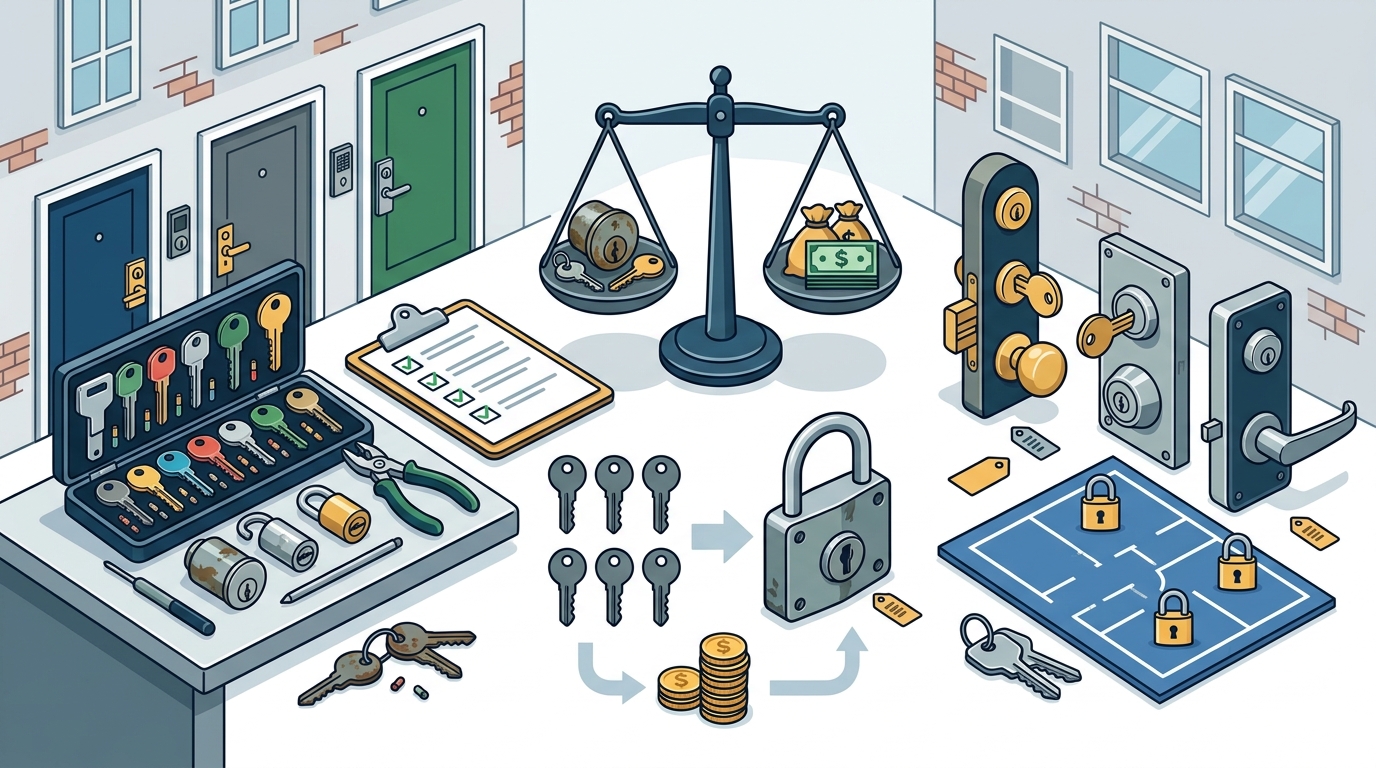
When deciding between rekeying and replacing locks, a cost-benefit analysis is crucial. Rekeying is generally less expensive than replacement, as it involves only the internal components of the lock. However, the cost difference can vary depending on the number of locks and the complexity of the keying system. For large properties with many units, the cumulative cost of rekeying can be significant.
| Criteria | Rekeying | Replacement |
|---|---|---|
| Cost per Lock | $50 - $150 | $100 - $300+ |
| Time Required | 15-30 minutes | 30-60 minutes |
| Hardware Lifespan | Extends existing life | Starts new life |
| Security Upgrade | None (resets access) | Can include high-security features |
| Best Use Case | Tenant turnover, lost keys | Worn/damaged locks, upgrades |
The decision should also consider the long-term benefits. Rekeying resets access but does not improve the physical security of the lock. If the lock is old or low-quality, replacing it with a high-security lock provides better protection against forced entry. High-security locks often come with warranties and superior durability, which can reduce maintenance costs over time.
Additionally, consider the impact on tenant satisfaction. New locks can enhance the perceived value of the property. Tenants appreciate the feeling of being the first to enter a fresh space. This psychological benefit can lead to higher tenant retention rates and positive reviews. Conversely, rekeying old, worn locks may not provide the same level of satisfaction, as the hardware may still feel outdated or unreliable.
Finally, evaluate the availability of replacement hardware. Some older or specialized locks may be difficult to source, making rekeying the only viable option. In such cases, working with a professional locksmith who can source parts or fabricate keys is essential. LT Lock and Key specializes in both residential and commercial locksmith services, ensuring that we can handle any hardware challenge you face.
Key Takeaways for Landlords
- Exterior Locks First: Always rekey all exterior locks during tenant turnover to eliminate unauthorized access risks.
- Master Key Compromise: If a master key is lost, rekey the entire property immediately to secure all units.
- Hardware Condition: Assess the physical state of locks; replace worn or damaged cylinders rather than rekeying them.
- Cost Efficiency: Rekeying is typically 50% cheaper than replacement, making it the preferred option for functional locks.
- Documentation: Keep detailed records of all rekeying events for insurance and legal protection.
- Professional Service: Hire licensed locksmiths like LT Lock and Key to ensure proper installation and keying.
- Proactive Audits: Conduct annual hardware audits to identify locks that need replacement before they fail.
Frequently Asked Questions
How often should I rekey my rental property?
You should rekey your rental property every time a tenant moves out. This ensures that former tenants no longer have access to the property. Additionally, rekey if you lose a master key or if a lock becomes damaged.
Can I rekey locks myself?
While it is technically possible to rekey locks yourself, it requires specialized tools and knowledge. Incorrect rekeying can damage the lock or result in a lock that does not function properly. It is recommended to hire a professional locksmith.
What is the difference between rekeying and replacing a lock?
Rekeying changes the internal pins of the lock so it works with a new key, while the external hardware remains the same. Replacing a lock involves removing the old hardware and installing a new one. Rekeying is generally cheaper and faster.
How much does it cost to rekey a lock?
The cost to rekey a lock typically ranges from $50 to $150 per lock, depending on the type of lock and the locksmith's rates. LT Lock and Key offers competitive pricing for residential and commercial services.
Do I need to rekey interior locks?
Interior locks generally do not need to be rekeyed unless the previous tenant had copies of the master key or if the lock is part of a compromised master key system. Exterior locks should always be rekeyed.
What if the lock is broken?
If the lock is broken or jammed, it likely needs to be replaced rather than rekeyed. A professional locksmith can assess the damage and recommend the best course of action.
How long does it take to rekey a lock?
A professional locksmith can typically rekey a lock in 15 to 30 minutes. LT Lock and Key offers same-day service to minimize downtime for your rental property.
Contact LT Lock and Key
Managing rental properties requires attention to detail and a commitment to security. By following these essential criteria for choosing which locks to rekey, you can protect your investment and provide a safe environment for your tenants. LT Lock and Key is dedicated to providing quick, cost-effective locksmith solutions. Our team is available to handle all your rekeying and lock installation needs in Encinitas, Carlsbad, Del Mar & Carmel Valley, CA.
Do not wait until a security breach occurs to take action. Contact us today to schedule a consultation or to request a free quote. We are just a phone call away, ready to help you secure your rental properties with professional expertise and reliable service. Call (858) 699-0366 now to discuss your needs with a qualified locksmith in Encinitas, La Jolla, California and surrounding areas.