

Home security is a critical component of modern living, yet many homeowners overlook the simplest way to maintain it. According to recent crime data, approximately 34% of burglaries occur through an unlocked door, often one that was previously accessible to former tenants or service providers. This statistic highlights why rekeying your locks is a vital, cost-effective security measure. While professional locksmiths offer convenience, understanding the DIY process empowers you to secure your home in Encinitas, Carlsbad, Del Mar, and Carmel Valley without waiting for an appointment. This guide breaks down the technical process of rekeying, ensuring you can protect your property efficiently.
Understanding Rekeying vs. Replacement
Before diving into the physical work, it is essential to distinguish between rekeying and replacing. Rekeying is the process of changing the internal pins of a lock cylinder so that it operates with a new key, while the existing hardware remains intact. This is fundamentally different from replacing the entire lock, which involves removing the old hardware and installing a completely new unit. Rekeying is often preferred because it allows you to use one key for multiple doors, simplifying your home security management. It is also significantly more affordable than buying new high-security hardware.
For homeowners in San Diego County, this distinction is particularly relevant. If you have high-quality locks installed by a professional residential locksmith, rekeying preserves that investment. It ensures that old keys, which may have been lost or copied by movers, painters, or previous tenants, no longer work. This method provides immediate security upgrades without the need for extensive drilling or hardware modification.
Required Tools and Materials
Success in DIY rekeying depends entirely on having the correct tools. Attempting this task with inadequate equipment can damage the lock mechanism, leading to a situation where you must call a local locksmith in Encinitas for emergency repairs. Gather the following items before you begin:
- Rekeying Kit: Most new locks come with a kit, but you can purchase universal kits online. Ensure it matches your lock brand (e.g., Kwikset, Schlage).
- New Keys: You must have the new key in hand before starting. The pins are set to match this specific key.
- Screwdrivers: A Phillips head and a flathead screwdriver are typically required to remove the faceplate and retaining clips.
- Pin Tumbler Tool: Often included in the kit, this small metal tool is used to push down the driver pins.
- Pin Tray: A small container to hold the tiny pins in order. Losing a pin can render the lock useless.
- Flashlight: To illuminate the interior of the cylinder for better visibility.
Step 1: Removing the Door Knob
The first physical step is to remove the interior and exterior portions of the door knob or deadbolt. Start by locating the small release hole on the neck of the interior handle. Insert a small screwdriver or paperclip into this hole while pulling the handle away from the door. This releases the internal retaining clip.
Once the handle is off, remove the visible screws on the interior rose (the decorative plate against the door). Pull the interior assembly away, and then remove the exterior handle. You will now see the latch mechanism and the cylinder housing. Always keep track of the orientation of the latch to ensure correct reinstallation later. Place all removed screws and small components in your pin tray or a secure container to prevent loss.
Step 2: Extracting the Cylinder
With the handles removed, you must extract the lock cylinder. Look for a small slot or hole on the side of the latch body, near where the cylinder is inserted. This is the cylinder retention slot. Insert your pin tumbler tool or a small screwdriver into this slot. You will feel resistance as the tool engages with the internal retention pin.
Apply gentle pressure to the tool to hold the retention pin down, then pull the cylinder out from the opposite side. If the cylinder is stuck, do not force it. Check for any remaining screws or clips that may be holding it in place. Once free, place the cylinder on a clean, flat surface. This is the core component that will be rekeyed.
Step 3: Manipulating the Pins
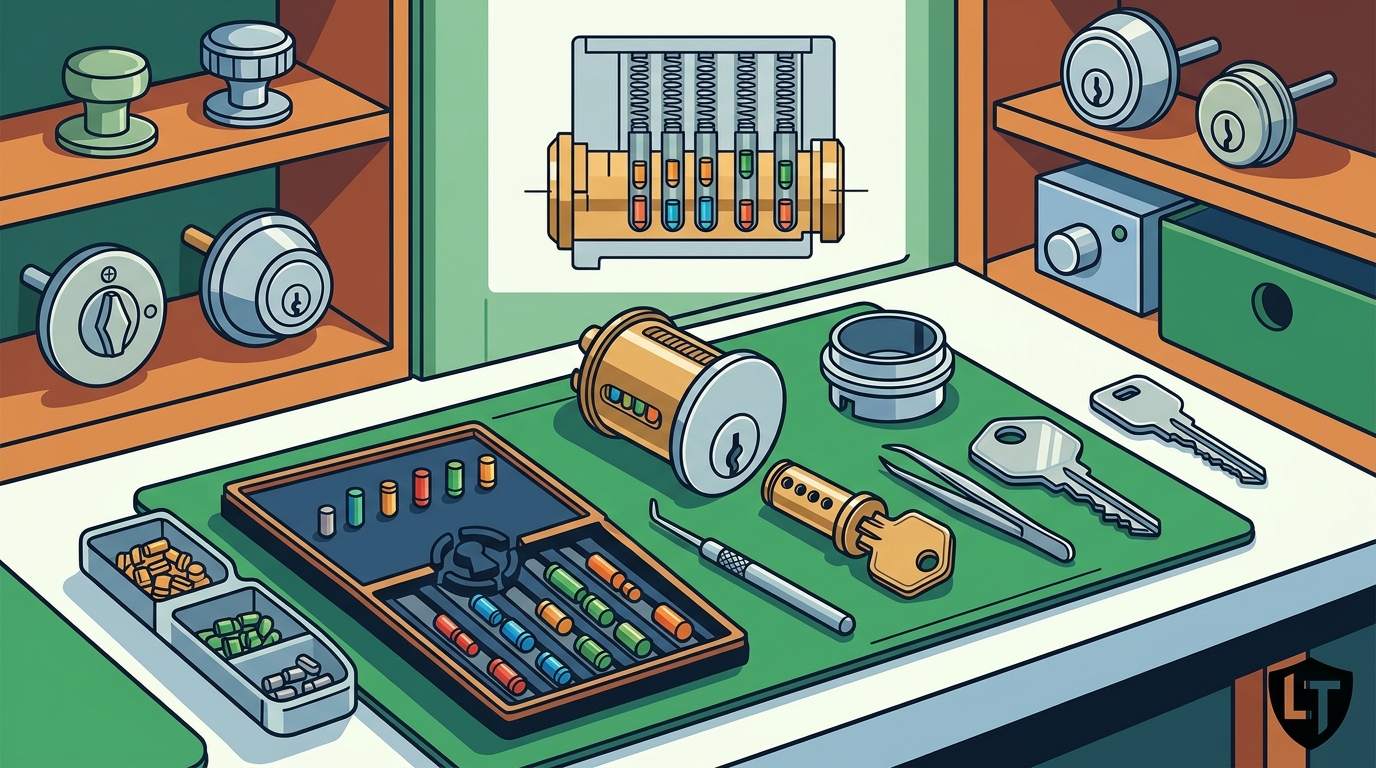
This is the most technical part of the process. The cylinder contains a series of pin stacks, each consisting of a driver pin and a key pin. The goal is to replace the key pins with new ones that match the cuts of your new key.
- Remove the Retaining Clip: At the end of the cylinder, there is a small metal clip holding the pins in place. Use a small screwdriver to pry this clip out carefully.
- Empty the Pins: Turn the cylinder upside down over your pin tray. The pins will fall out. Record the order and length of each pin stack by placing them in the tray in the exact order they fell out. This is crucial for troubleshooting if you make a mistake.
- Insert New Pins: Using the chart provided in your rekeying kit, identify the pin lengths required for your new key. Insert the new key pins into the bottom of the pin stacks. Then, insert the corresponding driver pins on top.
- Reinsert the Clip: Once all pins are in place, carefully reinsert the retaining clip. Ensure it snaps securely into its groove.
If you are unsure about pin lengths, many hardware stores offer key cutting and rekeying services. However, for those who prefer a hands-on approach, this step requires patience and precision. A single incorrect pin can cause the lock to bind or fail to turn.
Step 4: Reassembly and Testing
After rekeying the cylinder, it is time to reassemble the lock. Insert the rekeyed cylinder back into the latch body from the exterior side. Ensure the retention slot aligns correctly. You should hear a click when the cylinder is fully seated.
Reattach the interior handle assembly, ensuring the mounting plate sits flush against the door. Insert and tighten the screws. Reattach the exterior handle, making sure the spindle aligns with the interior mechanism. Test the lock multiple times with the new key. It should turn smoothly without excessive force. If the key sticks, do not force it. Disassemble the lock again to check for pin misalignment.
When to Call a Professional
While DIY rekeying is feasible for standard residential locks, there are scenarios where professional intervention is necessary. High-security locks, smart locks, and electronic deadbolts often have proprietary mechanisms that cannot be rekeyed by homeowners. Attempting to disassemble these units can void warranties and cause permanent damage.
Additionally, if you encounter rusted pins, broken clips, or stripped screws, continuing the DIY process may result in a broken lock. In such cases, contacting a licensed locksmith in Carlsbad is the most cost-effective solution. Professionals have specialized tools and access to OEM parts that can restore functionality quickly. For residents in Del Mar and Carmel Valley, LT Lock and Key offers same-day service for complex lock issues, ensuring your home remains secure without the frustration of failed DIY attempts.
Key Takeaways
- Rekeying changes the internal pins to work with a new key, preserving existing hardware.
- Approximately 34% of burglaries involve unlocked doors, making rekeying a critical security step.
- Essential tools include a rekeying kit, screwdrivers, and a pin tray for organization.
- Always record pin order when removing them to facilitate troubleshooting.
- Test the new key thoroughly before fully reassembling the lock mechanism.
- High-security and smart locks often require professional rekeying services.
- Professional locksmiths in San Diego County offer same-day service for complex issues.
Frequently Asked Questions
How long does it take to rekey a door lock?
For a standard pin-tumbler lock, the DIY process typically takes between 15 to 30 minutes per lock. This includes removal, pin manipulation, and reassembly. If you encounter difficulties or need to troubleshoot pin alignment, it may take longer. Professional locksmiths can often complete the task in under 10 minutes due to their experience and specialized tools.
Can I rekey a lock without the original key?
No, you cannot rekey a lock without the original key or a disassembled cylinder. The rekeying process requires removing the existing pins, which necessitates opening the cylinder. If you have lost the original key, you must either pick the lock to open it or replace the entire cylinder. In such cases, calling a locksmith in Encinitas is the most efficient solution.
What is the difference between rekeying and replacing a lock?
Rekeying modifies the internal components of an existing lock to work with a new key, while replacing involves removing the old hardware and installing a new unit. Rekeying is generally more affordable and allows for key uniformity across multiple doors. Replacement is necessary if the lock is damaged, worn out, or if you wish to upgrade to a different security level.
Is it safe to rekey a lock myself?
Yes, rekeying is safe if you follow the instructions carefully and use the correct tools. The primary risk is damaging the lock mechanism by forcing components or losing small pins. If you are uncomfortable with the technical aspects, hiring a professional ensures the job is done correctly and securely.
How often should I rekey my residential locks?
It is recommended to rekey your locks after moving into a new home, after a break-in attempt, or if you lose your keys. Additionally, rekeying every few years is a good practice to ensure that old copies of keys no longer function. Regular maintenance helps maintain the integrity of your home security.
Can I use the same key for multiple locks?
Yes, this is one of the main benefits of rekeying. You can have multiple locks rekeyed to operate with the same key, a process known as keying alike. This simplifies access to different parts of your home. However, ensure that all locks are of the same brand and type to guarantee compatibility.
What should I do if the new key does not turn?
If the new key does not turn, do not force it. This usually indicates a pin misalignment. Disassemble the lock again and check the pin stacks. Ensure that the pins are seated correctly and that the retaining clip is fully engaged. If the problem persists, the lock may be defective, and you should contact a professional locksmith for assistance.
Secure Your Home Today
Rekeying your residential door locks is a powerful way to enhance your home security without the high cost of replacement. By following these steps, you can regain control over who has access to your property. However, if you encounter complex locks or need immediate assistance, professional help is just a call away. Contact LT Lock and Key today to schedule a service or to learn more about our comprehensive locksmith solutions in Encinitas, Carlsbad, Del Mar, and Carmel Valley. Protect your home with expert care and peace of mind.