
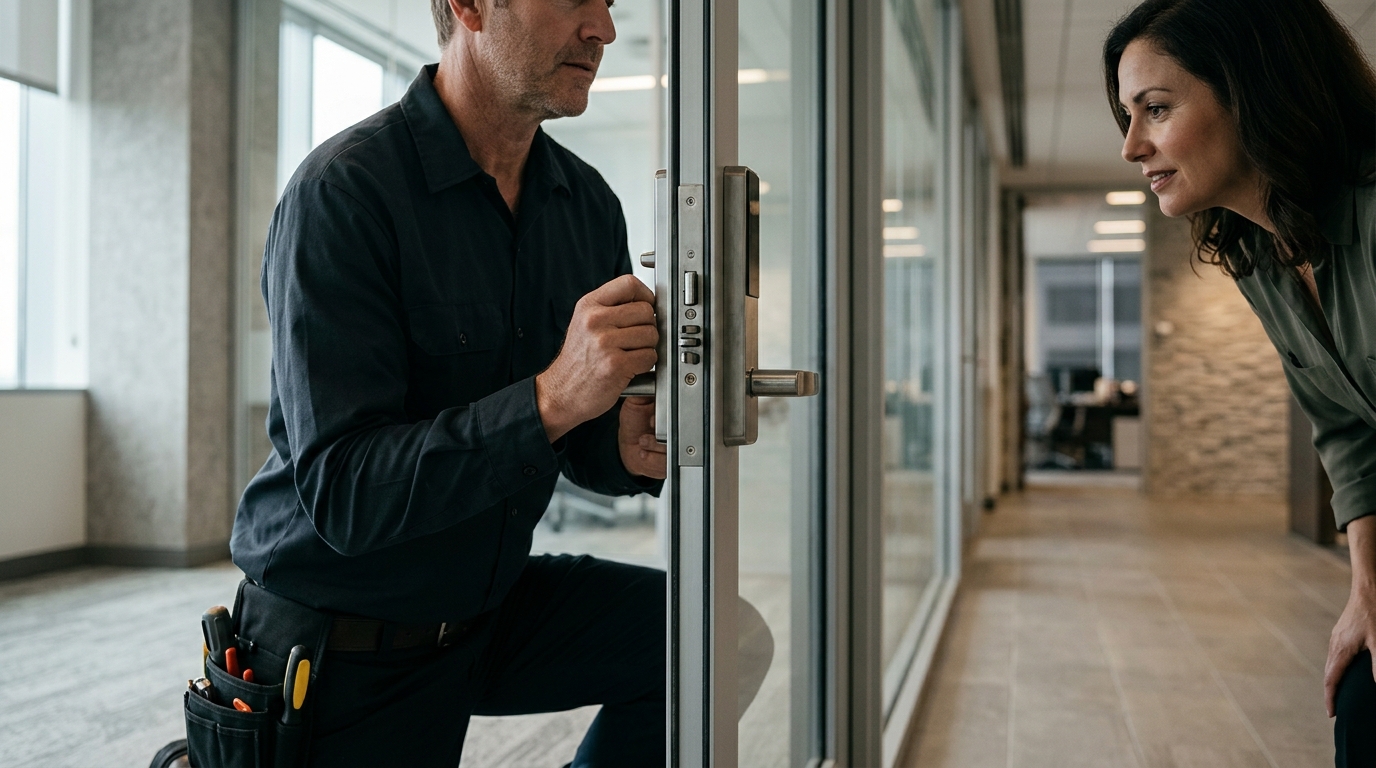
High-security commercial door hardware represents a critical investment for business continuity and asset protection. According to recent industry data, over 60% of commercial break-ins involve forced entry through compromised door hardware, highlighting the necessity of maintaining robust security infrastructure. When these complex systems fail, business owners often face a binary choice between costly full replacements or attempting repairs. Understanding the technical limitations and capabilities of professional locksmiths is essential for making informed decisions that balance security integrity with budget constraints.
Feasibility of Repairing High-Security Locks
The short answer is yes, a qualified locksmith can often repair high-security commercial door hardware, but the scope of repair is strictly limited by the manufacturer's design and the nature of the failure. High-security locks, such as those from Mul-T-Lock, Medeco, or ASSA ABLOY, utilize complex internal mechanisms including pin tumbler variations, side bars, and magnetic components. These systems are engineered for maximum resistance to picking, drilling, and bumping, which inherently complicates repairability.
Lock repair is generally feasible when the issue stems from mechanical wear, debris accumulation, or minor misalignment. For instance, if a high-security cylinder becomes stiff due to accumulated dirt or lack of lubrication, a professional can disassemble the unit, clean the internal pins, and apply specialized graphite or PTFE lubricant to restore smooth operation. However, if the core mechanism is damaged, such as a broken shear line or a snapped key, repair is often impossible without replacing the core or the entire cylinder.
It is crucial to distinguish between lock repair and lock rekeying. Rekeying involves changing the internal pin configuration to work with a new key while retaining the existing hardware. This is a common and effective service for high-security systems when key control is lost. In contrast, physical repair addresses mechanical dysfunction. LT Lock and Key specializes in diagnosing these specific failures to determine if a repair will restore the lock to its original security rating or if replacement is the only viable option to maintain compliance with safety standards.
Common High-Security Hardware Failures
Understanding the specific points of failure in high-security hardware helps business owners identify when professional intervention is necessary. These systems are subjected to heavy daily use, environmental factors, and potential tampering attempts. The most frequent issues include:
1. Cylinder Wear and Tear
Over time, the pins and springs inside a high-security cylinder wear down. This leads to a key that feels loose or requires excessive force to turn. While this is a natural part of the lifecycle, it can be mitigated with proper lubrication and timely maintenance. If the wear is severe, the lock may fail to engage the bolt entirely, leaving the door vulnerable.
2. Key Breakage
High-security keys often have complex cuts and milled grooves. If a key breaks off inside the cylinder, it blocks the pins from moving. Attempting to remove a broken key without the proper tools can damage the internal mechanism further. A professional locksmith has specialized extraction tools to remove the fragment without harming the lock, potentially allowing for a simple rekey or repair.
3. Misalignment of Door Hardware
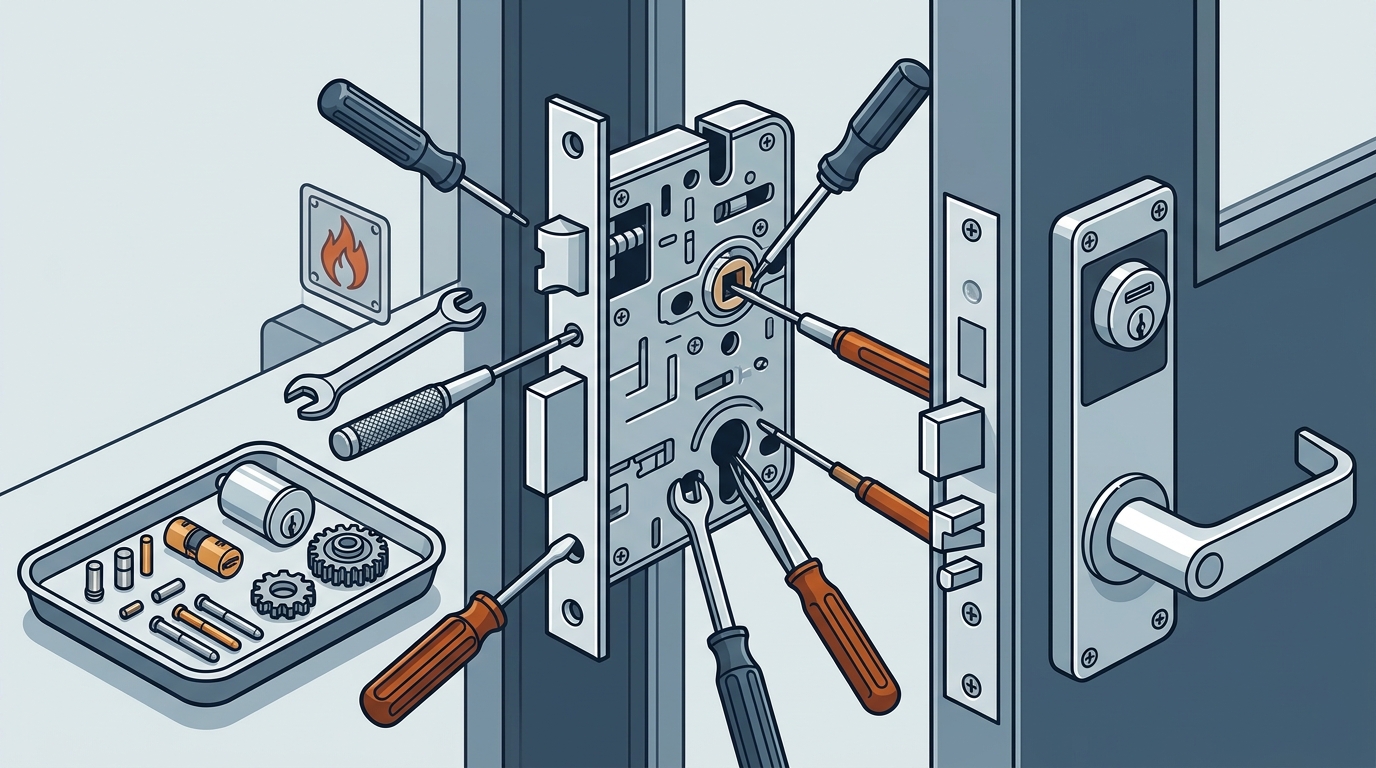
Commercial doors, especially those in high-traffic areas, can shift over time due to settling or heavy usage. This misalignment causes the deadbolt or latch to bind against the strike plate. While this is technically a door alignment issue, it puts immense stress on the lock hardware, leading to premature failure. Adjusting the strike plate or hinge can often resolve the issue and extend the life of the lock.
4. Corrosion and Environmental Damage
Exterior commercial doors are exposed to moisture, dust, and temperature fluctuations. Corrosion can seize the internal components of a lock, rendering it inoperable. In coastal areas like Encinitas and Del Mar, salt air accelerates this process. Regular cleaning and the application of corrosion-resistant lubricants are essential to prevent this type of failure.
Repair Versus Replacement Analysis
Deciding between repair and replacement is a critical financial and security decision. The following table outlines the key factors to consider when evaluating high-security commercial door hardware.
| Factor | Repair Scenario | Replacement Scenario |
|---|---|---|
| Cost Efficiency | Lower immediate cost. Ideal for minor mechanical issues like stiffness or debris. | Higher upfront cost. Necessary when the core mechanism is damaged or obsolete. |
| Security Integrity | Maintains original security rating if performed by a certified professional. | Allows for upgrading to newer, more advanced security technologies. |
| Availability | Quick turnaround for common issues. No need to wait for parts. | May require lead time for specialized high-security parts to be sourced. |
| Longevity | Extends the life of existing hardware. Best for locks in good overall condition. | Provides a fresh start with a new warranty and full lifespan. |
| Key Control | Rekeying can be part of the repair process to restore key control. | Often accompanied by a complete rekeying of the entire facility. |
If the lock has suffered physical damage, such as a drilled core or a bent housing, repair is not an option. In these cases, replacement is mandatory to restore security. Additionally, if the high-security system is outdated and no longer supported by the manufacturer, replacement with a modern system is the only path forward. LT Lock and Key provides comprehensive lock repair and installation services to help you navigate these decisions.
Selecting the Right Commercial Locksmith
Not all locksmiths are equipped to handle high-security commercial hardware. These systems require specialized training, proprietary tools, and access to manufacturer-specific parts. When searching for a provider, consider the following criteria:
Certification and Training
Look for locksmiths who are certified by major high-security manufacturers. This certification ensures they have the technical knowledge to disassemble and reassemble complex mechanisms without causing further damage. A certified locksmith understands the precise tolerances and pinning configurations required for each brand.
Experience with Commercial Systems
Residential locksmiths may not have the expertise or tools needed for commercial high-security locks. Ensure your provider has a proven track record in commercial locksmith services. They should be familiar with access control systems, master key systems, and high-security cylinders.
Local Availability and Response Time
For commercial clients, downtime is lost revenue. Choose a locksmith who offers same-day service and has a strong presence in your area. LT Lock and Key serves Encinitas, Carlsbad, Del Mar, and Carmel Valley, providing rapid response times for urgent commercial needs.
Reputation and Reviews
Check online reviews and testimonials from other business owners. A reputable locksmith will have a history of positive feedback regarding their technical competence, professionalism, and pricing transparency. You can read more about our client experiences on our reviews page.
Preventative Maintenance Strategies
Prevention is always more cost-effective than repair. Implementing a regular maintenance schedule for your high-security commercial door hardware can significantly extend its lifespan and prevent unexpected failures. Here are some best practices:
- Regular Lubrication: Apply a dry graphite or PTFE-based lubricant to the keyway and cylinder every six months. Avoid oil-based lubricants, which can attract dirt and gum up the mechanism.
- Key Inspection: Regularly inspect keys for signs of wear, bending, or damage. Replace worn keys immediately to prevent them from breaking in the lock.
- Door Alignment Checks: Ensure that doors close properly and that the latch engages fully with the strike plate. Adjust hinges and strike plates as needed to prevent binding.
- Professional Inspections: Schedule annual inspections with a professional locksmith. They can identify early signs of wear and recommend proactive repairs or upgrades.
By adhering to these maintenance practices, you can ensure that your high-security hardware continues to perform at its peak. For more information on our maintenance services, visit our locksmith services page.
Key Takeaways
- High-security commercial door hardware can often be repaired, but only if the damage is mechanical and not structural.
- Common issues include cylinder wear, key breakage, misalignment, and corrosion, each requiring specific diagnostic approaches.
- Repair is cost-effective for minor issues, while replacement is necessary for severe damage or outdated systems.
- Choosing a certified commercial locksmith is critical to maintaining the security integrity of high-security locks.
- Regular maintenance, including lubrication and alignment checks, can prevent many common failures.
- LT Lock and Key offers specialized commercial locksmith services in Encinitas, Carlsbad, Del Mar, and Carmel Valley.
- Over 25 years of service in San Diego County demonstrates our commitment to reliable and professional locksmith solutions.
Frequently Asked Questions
Can any locksmith repair high-security locks?
No, only locksmiths with specific training and certification in high-security systems should attempt repairs. These locks require specialized tools and knowledge to avoid damage.
How much does it cost to repair a high-security commercial lock?
Costs vary depending on the extent of the damage and the type of lock. Minor repairs may cost less than full replacements. Contact LT Lock and Key for a free quote at (858) 699-0366.
What is the difference between rekeying and repairing a lock?
Rekeying changes the internal pins to work with a new key, while repairing fixes mechanical issues like stiffness or broken components. Both services are offered by professional locksmiths.
Can I repair a high-security lock myself?
It is not recommended. High-security locks are complex and require professional expertise. Attempting DIY repairs can void warranties and compromise security.
How often should high-security locks be maintained?
Regular maintenance should be performed every six months, including lubrication and inspection. Professional inspections should be conducted annually.
What brands of high-security locks do you service?
We service all major high-security brands, including Mul-T-Lock, Medeco, ASSA ABLOY, and others. Our team is trained to handle a wide range of commercial locking systems.
Do you offer emergency commercial locksmith services?
Yes, we offer same-day service for urgent commercial locksmith needs in Encinitas, Carlsbad, Del Mar, and Carmel Valley. Call us immediately for assistance.
Contact LT Lock and Key for Expert Repair Services
When your high-security commercial door hardware fails, you need a reliable partner who understands the complexities of these systems. LT Lock and Key brings over 25 years of experience to every job, ensuring that your business remains secure and operational. Whether you need a simple repair, a complex rekeying, or a full hardware upgrade, our team is ready to help.
Do not compromise on security. Contact us today to schedule a consultation or to request a free quote. We serve the greater San Diego metropolitan area, including Encinitas, Carlsbad, Del Mar, and Carmel Valley. Call (858) 699-0366 or visit our contact page to get started.